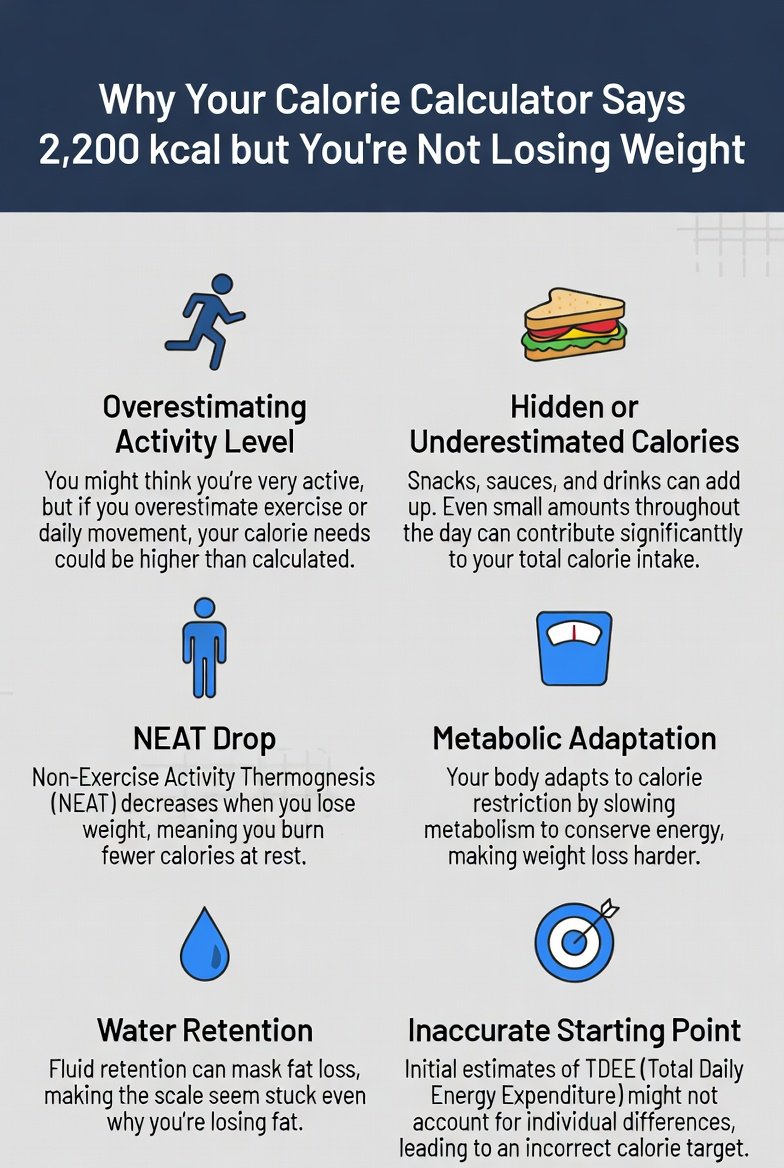
Why Your Calorie Calculator Says 2,200 kcal But You’re Not Losing Weight
You’ve plugged your stats into a calorie calculator (hopefully ours), got “maintenance” at 2,200 kcal, set a deficit to 1,800–2,000, tracked “perfectly” for weeks… and the scale mocks you. Zero loss, maybe even a sneaky gain. Frustrating as hell, right?
This happens to almost everyone at some point. The calculator isn’t lying — it’s estimating based on formulas and your inputs. But real life isn’t a spreadsheet. Here’s why your 2,200 kcal (or whatever number) isn’t delivering the fat loss it promises, and how to fix it the no-BS way.
1. You Overestimated Your Activity Level (The #1 Culprit)
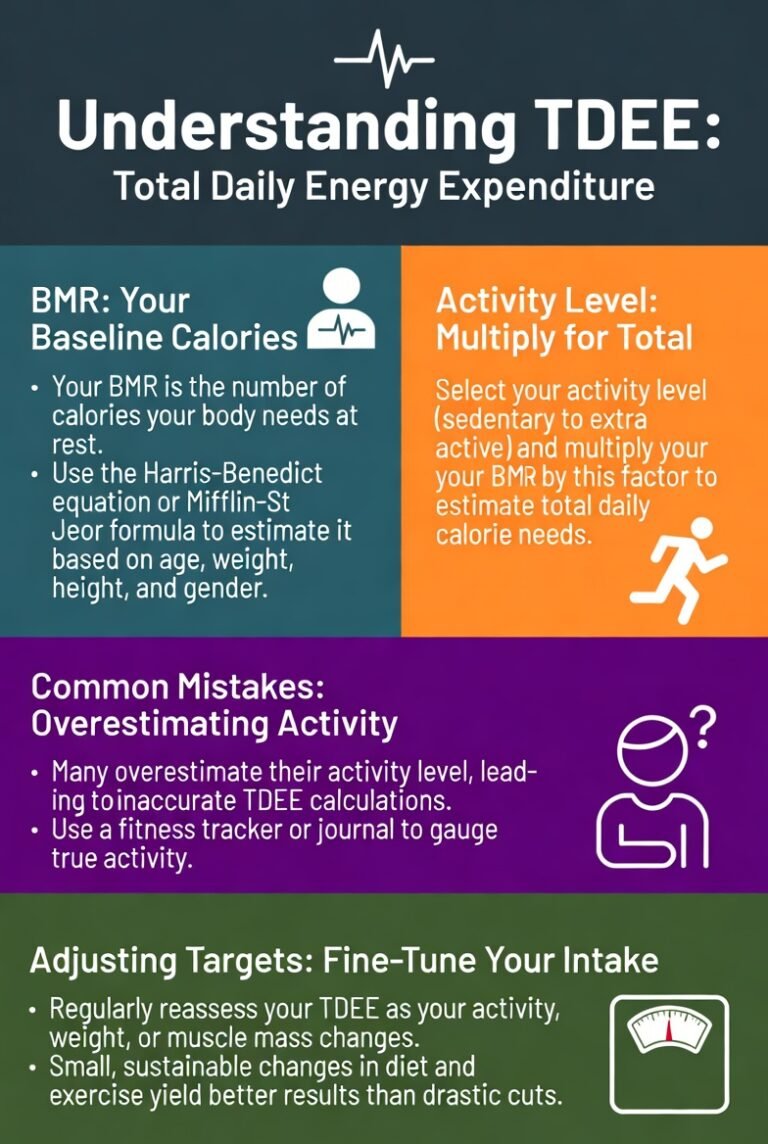
Most people think they’re “moderately active” because they hit the gym 3–4x/week. Reality: If the other 23 hours are desk, couch, car — you’re likely “lightly active” at best.
- Overestimating by one multiplier level (e.g., 1.55 instead of 1.375) inflates TDEE by 300–500 kcal.
- Result: Your “deficit” is actually maintenance or slight surplus.
James Smith hammers this: Be brutally honest. Start conservative (lower multiplier), add if progress stalls upward. Track steps — aim 8–10k daily for “moderate” without gym.
2. Hidden or Underestimated Calories (You Think You’re at 1,800 — You’re Probably at 2,200+)
Humans are terrible at eyeballing portions. Studies show people underreport intake by 20–50% when not weighing food.
Common culprits:
- “A splash” of oil/milk/condiments (100–300 kcal easy).
- Weekend “cheats” or drinks forgotten.
- Protein bars/shakes with sneaky adds.
- Mindless snacking while scrolling.
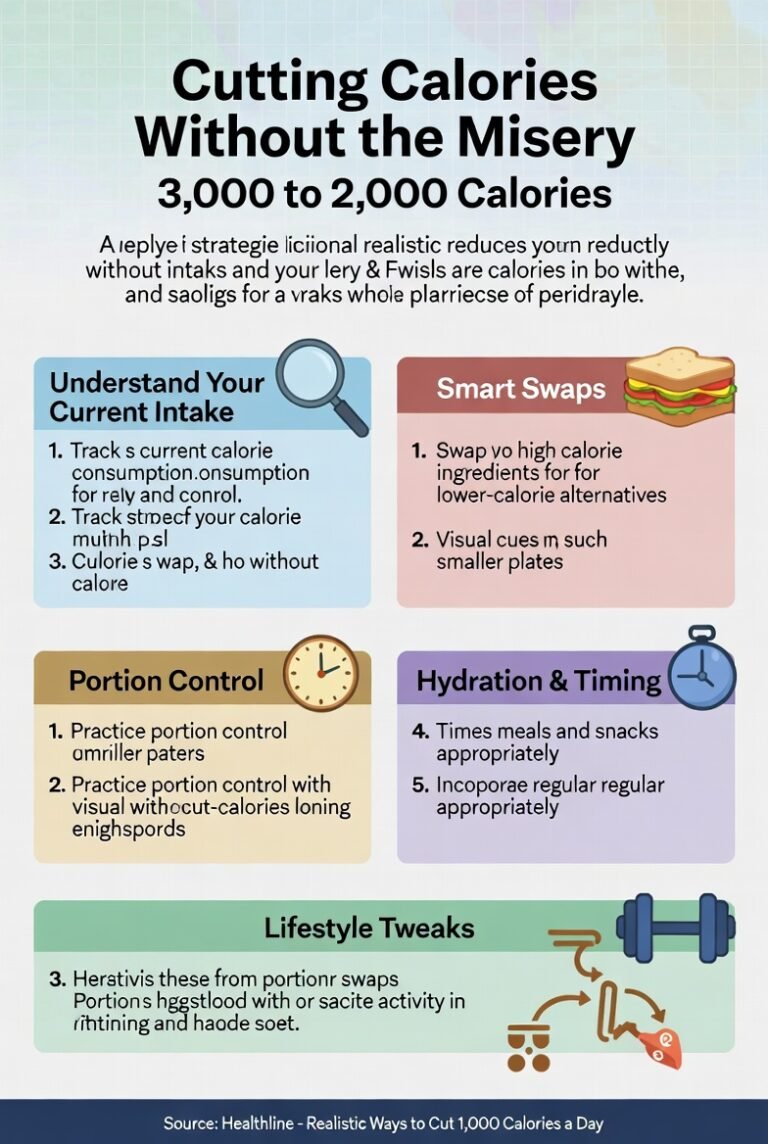
Fix: Weigh everything for 7–14 days (use grams scale). Log religiously. If after accurate tracking you’re still not losing — the issue is elsewhere.
3. NEAT Dropped Without You Noticing (Your Body’s Sneaky Adaptation)
Non-Exercise Activity Thermogenesis (NEAT) — fidgeting, pacing, standing more — can drop 200–500 kcal/day in a deficit. Your subconscious conserves energy.
- You move less overall (fewer steps, more sitting, slower pace).
- This closes your deficit gap fast.
Track steps religiously. If they fall 2–3k from baseline, that’s your missing calories. Force NEAT up: Walk calls, stand desk, park farther.
4. Metabolic Adaptation Kicked In (Your Body Fights Back)
After 4–12+ weeks in deficit (or big initial loss), BMR drops 5–15% beyond what’s expected from lower bodyweight. Hormones adjust (lower thyroid, leptin), energy expenditure falls.
- Combined with NEAT drop, effective TDEE can fall 300–700 kcal.
- Your original 2,200 “maintenance” is now higher than actual burn.
Signs: Constant fatigue, stalled lifts, increased hunger. Solution: Diet break (2–4 weeks at maintenance) to reset, then resume moderate deficit. Don’t slash calories further — that’s counterproductive.
5. Water Retention, Muscle Gain, or Scale Tricks Masking Fat Loss
Scale weight isn’t fat loss:
- New training? Muscle gain offsets fat loss.
- High sodium/carbs? Water hold (2–5 kg easy).
- Women: Cycle fluctuations (up to 3–5 lbs pre-period).
- Poor sleep/stress → Cortisol spikes retention.
Fix: Use weekly average weight, tape measurements, progress photos, body-fat estimates. If inches drop/clothes loosen but scale stalls — you’re winning.
6. Inaccurate Starting Point or No Adjustments
Calculator uses Mifflin-St Jeor (best available), but:
- Genetics vary ±10–15%.
- As you lose weight, recalculate TDEE every 4–6 weeks (needs drop ~20–25 kcal/kg lost).
Don’t set and forget. Re-run numbers, adjust down 100–200 kcal if stalled after accurate tracking.
How to Fix It and Start Losing Again
- Re-assess activity honestly — drop multiplier if needed.
- Track intake precisely (weigh food, no estimates) for 2 weeks.
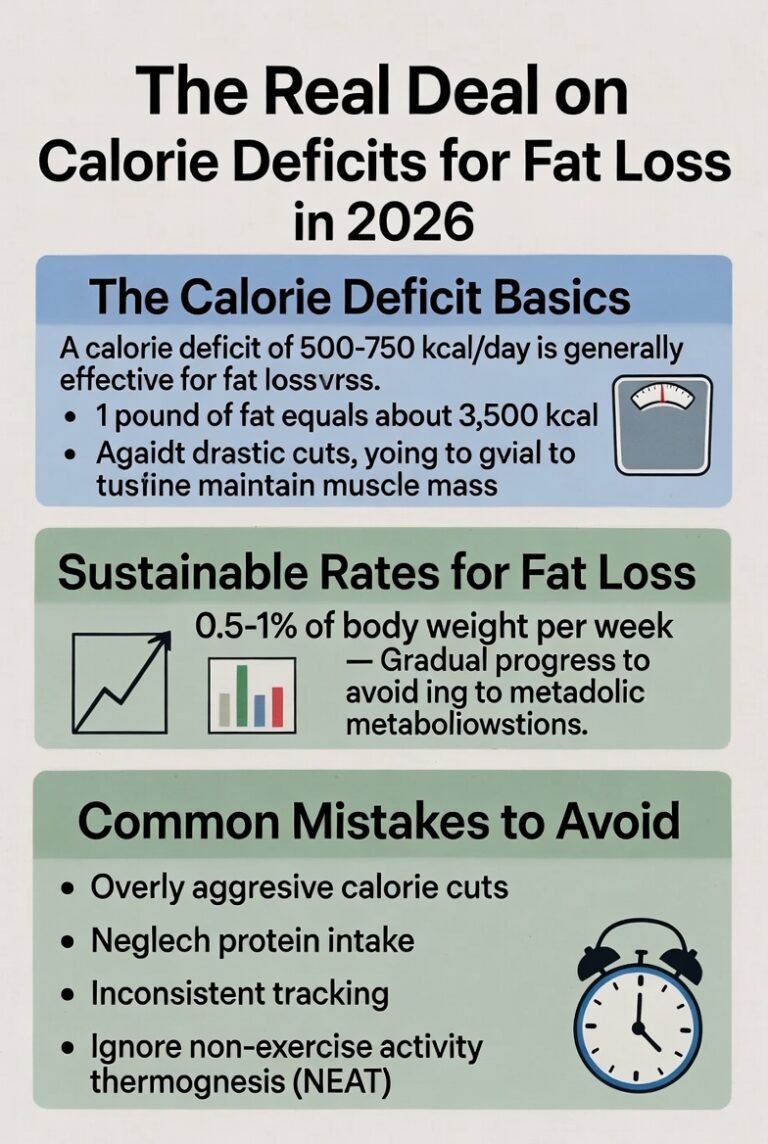
- Monitor true TDEE via progress: No loss after accurate 2 weeks? Subtract 150–250 kcal or add 2–3k steps.
- Include diet breaks if adapted (eat at new maintenance 1–2 weeks).
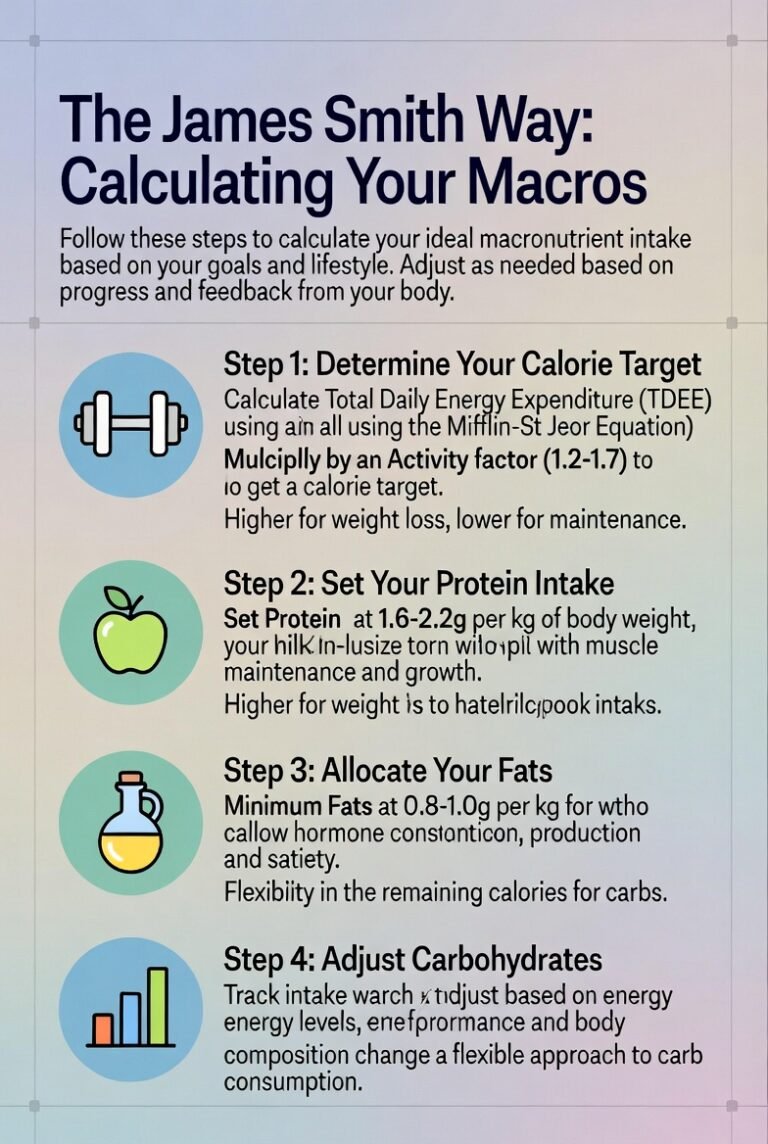
- Prioritize sleep, stress management, high protein (2 g/kg) to minimize adaptation.
- Be patient — sustainable loss is 0.5–1% bodyweight/week.
Your calculator gave a solid starting point. Reality checks it. Plug updated stats into the James Smith Calculator now — get fresh TDEE/calories/macros. Track brutally honest for 14 days. Adjust based on scale/mirror, not feelings.
Stop blaming the tool. Own the variables. Get lean the smart way.