Activity Level Reality Check: Sedentary vs Very Active – Which One Are You Really?
You’ve probably used a TDEE calculator (hopefully ours!) and selected “Sedentary,” “Lightly Active,” “Moderately Active,” or “Very Active.” But here’s the harsh truth: most people overestimate their activity level by a full category or more. This single mistake can throw your calorie targets off by 300–600+ calories per day, leading to stalled progress, unexpected weight gain, or unnecessary frustration.
We’ll do a no-BS reality check on what each activity level actually means, why NEAT (Non-Exercise Activity Thermogenesis) matters more than you think, how to honestly assess where you fall, and how to fix it using the James Smith Calculator for accurate results. Time for some self-honesty—let’s figure out which one you really are.
Why Activity Level Matters So Much for TDEE
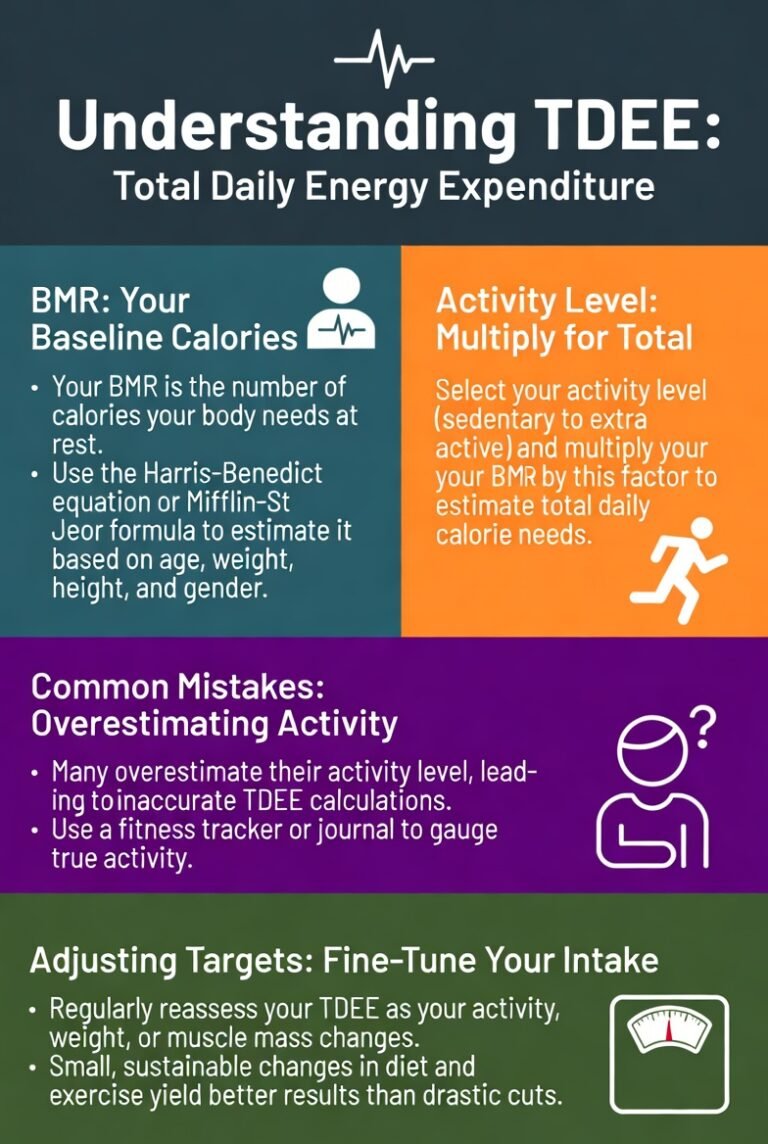
TDEE = BMR (Basal Metabolic Rate) × Activity Multiplier
Your BMR is the calories you burn at complete rest (breathing, heart beating, etc.). The activity multiplier accounts for everything else: workouts, daily movement, job demands, and subconscious fidgeting (NEAT).
Common multipliers (based on Mifflin-St Jeor or similar formulas):
- Sedentary (little or no exercise, desk job): ×1.2
- Lightly Active (light exercise/sports 1–3 days/week, or light daily movement): ×1.375
- Moderately Active (moderate exercise/sports 3–5 days/week, somewhat active job): ×1.55
- Very Active (hard exercise/sports 6–7 days/week, physically demanding job): ×1.725
- Extra/Super Active (very hard exercise + physical job or 2× training): ×1.9
A jump from Sedentary to Very Active can add 400–700 calories to your TDEE for the average person. Pick the wrong one, and you’re either undereating (feeling drained, losing muscle) or overeating (gaining unwanted fat).
The #1 mistake? Thinking “I go to the gym 4× a week” makes you Moderately or Very Active. It usually doesn’t—unless your whole day supports high movement.
Breaking Down the Activity Levels – Reality Check
Sedentary (×1.2) – The Default for Most Modern Adults
- Desk job 8+ hours/day
- Commute by car/public transport
- Little walking (under 4,000–5,000 steps/day on average)
- Exercise? Maybe 1–3 gym sessions/week, but the rest of the day is sitting/low movement
- Evenings: couch, scrolling, Netflix
Reality check: If you sit most of the day and your “activity” is just planned workouts, you’re Sedentary. Studies and real-world tracking show the vast majority of office workers, students, and remote workers fall here—even if they train hard a few times a week.
Lightly Active (×1.375) – A Step Up, But Still Modest
- Daily activities + light movement (e.g., walking dog, light chores)
- 5,000–7,500 steps/day average
- Exercise: light cardio or weights 3–4 days/week, ~30–45 min sessions
- Job might involve some standing/walking (teacher, retail with movement)
Reality check: This is realistic for someone who hits the gym consistently but doesn’t have an active lifestyle outside of it.
Moderately Active (×1.55) – Where Many Aspire, Few Truly Reach
- Regular moderate exercise 3–5 days/week (e.g., running, lifting, classes)
- 8,000–10,000+ steps/day
- Job involves notable movement (nurse, server, construction with breaks)
- You move a lot naturally—taking stairs, walking during calls, etc.
Reality check: Gym rats often pick this, but if your non-gym hours are sedentary, you’re overestimating. True moderate requires consistent daily movement beyond workouts.
Very Active (×1.725) – Rare for Non-Athletes
- Hard training 6–7 days/week (intense lifting + cardio)
- Physically demanding job (manual labor, delivery, athlete-level training)
- 12,000–15,000+ steps/day easily
- High NEAT: always on feet, fidgeting, active hobbies
Reality check: This is for construction workers who also train hard, competitive athletes, or people with jobs like landscaping + gym. Most gym-goers aren’t here—even dedicated ones.
The Hidden Player: NEAT – Why It Makes or Breaks Your Level
NEAT (Non-Exercise Activity Thermogenesis) is all movement outside formal exercise and sleeping: fidgeting, standing, pacing, chores, gestures, walking to the fridge.
- Sedentary people: low NEAT (sitting 10–12+ hours/day)
- Very active: high NEAT (standing desks, constant motion, 10k+ steps without “trying”)
Examples of NEAT boosters:
- Taking stairs instead of elevator
- Pacing during phone calls
- Standing while working/gaming
- Household chores vigorously
- Walking meetings or errands on foot
NEAT can vary by 500–2,000 calories/day between individuals—even at the same body size! When people diet or get busier, NEAT often drops subconsciously, lowering TDEE without you noticing.
Quick test: Track steps for a week (phone or watch). Under 5,000 = Sedentary. 5k–8k = Light. 8k–12k = Moderate. Over 12k consistently + hard training = Very Active.
How to Do Your Own Activity Level Reality Check
- Be brutally honest: Ignore how you feel about your effort. Look at your actual day.
- Track for 7 days:
- Steps average
- Hours sitting vs standing/moving
- Workout duration/intensity
- Use real data, not ego:
- Gym 4× week but sit 10 hours/day + low steps? → Sedentary or Light
- Construction job + gym? → Very Active
- Test with calories:
- Calculate TDEE using James Smith Calculator at “Sedentary”
- Eat at estimated maintenance for 2 weeks (track accurately)
- Weight stable? Spot on. Gaining? Overestimated activity. Losing? Underestimated (rare).
Pro tip: When in doubt, choose the lower activity level. It’s easier to add calories later than to cut them when you’re already hungry and stalled.
Fix It: Recalibrate with the James Smith Calculator
Head to the James Smith Calculator right now:
- Input accurate height, weight, age, gender
- Select the realistic activity level based on this reality check
- Get your true TDEE
- Set goals: deficit for fat loss (-300–500), surplus for muscle (+200–400), or maintenance
Re-check every 4–6 weeks or after big lifestyle changes (new job, more/less training).