From 3,000 to 2,000 Calories: Realistic Ways to Cut Without Feeling Miserable
Dropping from 3,000 kcal (typical for an active guy eating at maintenance) down to 2,000 kcal sounds brutal — starvation, constant hunger, zero energy, binge risk. But it doesn’t have to be. James Smith style: Make the deficit sustainable so you stick to it for months, not days. No extreme cuts, no “miserable mode” — just smart, gradual changes that keep you full, energized, and progressing.
A 1,000 kcal drop is aggressive but doable if done right: Aim for 0.5–1 kg/week loss (mostly fat) with high protein, volume foods, and habits that fight hunger. Here’s how to do it without hating life.
Step 1: Don’t Crash-Cut — Go Gradual (The Smart Way)
Jumping straight from 3,000 to 2,000 = misery. Your body rebels with hunger hormones, NEAT drops, and cravings.
- Week 1–2: Drop to 2,500–2,700 kcal (300–500 cut). Track honestly.
- Week 3–4: Down to 2,300–2,500.
- Week 5+: Settle at 2,000 (or whatever your calculator says for 15–20% deficit).
This lets metabolism adapt slowly, keeps energy up, and builds habits. Evidence shows gradual deficits (300–500 kcal/week) beat aggressive ones for adherence and less rebound.
Use our James Smith Calculator to get your starting TDEE — then subtract step-by-step.
Step 2: Prioritize Protein — Your Hunger Killer
Protein is king for satiety (highest thermic effect, fills you up longest). At 2,000 kcal, aim 160–200 g (1.8–2.2 g/kg for most guys).
- Swap low-protein snacks for Greek yogurt, eggs, chicken breast, tuna, cottage cheese, protein shakes.
- Example day at ~2,000: Breakfast — 4 eggs + oats (50 g protein); Lunch — 200 g chicken + veggies (60 g); Dinner — fish + salad (50 g); Snacks — whey + fruit (40 g).
- Result: You stay full longer, preserve muscle, burn more digesting it.
Low protein = constant hunger. High protein = easier deficit.
Step 3: Volume Eating — Eat More Food, Fewer Calories
Fill your plate with low-calorie-density foods (high water/fiber, low energy).
- Load up on veggies: Broccoli, spinach, cauliflower, zucchini, peppers — add 300–500 g per meal for bulk without calories.
- Fruits: Berries, apples, oranges — sweet fix with fiber.
- Swaps: Air-popped popcorn instead of crisps; cauliflower rice over white rice; zucchini noodles over pasta.
- Soups/stews: Broth-based with tons of veg — feels like a big meal.
This tricks your stomach into thinking you’re eating heaps (stomach stretch = fullness signals).
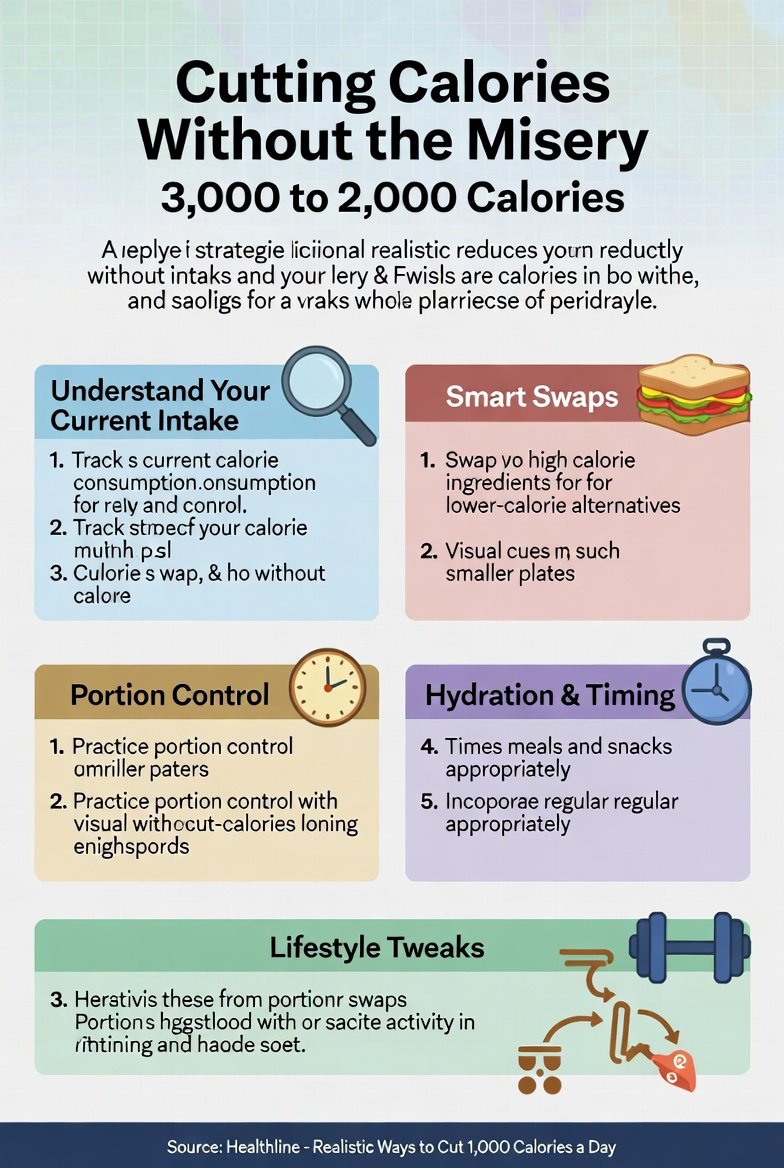
Step 4: Smart Food Swaps (Cut 500–800 kcal Easily)
No need to ban favorites — just upgrade.
- Drinks: Ditch sugary sodas/beer (200–400 kcal) for water, black coffee, zero-sugar drinks.
- Sauces/oils: Measure oil (1 tbsp = 120 kcal); use spray or broth for cooking.
- Snacks: Crisps/chocolate → Greek yogurt + berries, carrot sticks + hummus (portion-controlled).
- Eating out: Grilled over fried; skip sides or share; ask for sauces on side.
- Breakfast: Cereal/muffins → eggs + veg + oats (same satisfaction, half calories).
Small daily swaps add up to 500–1,000 kcal without feeling deprived.
Step 5: Habits That Fight Hunger and Make It Stick
- Drink water first: 500 ml before meals — reduces intake by 13% in studies.
- Eat slowly/chew more: Gives brain time to register fullness (20–30 min meals).
- Sleep 7–9 hours: Poor sleep spikes hunger hormones (ghrelin up, leptin down).
- Move more (NEAT): Walk 10k steps — burns extra without “exercise” misery.
- Diet breaks: Every 8–12 weeks, 1–2 weeks at maintenance (new TDEE) to reset hormones/adherence.
- Environment: No junk in house; prep meals ahead.
Common Mistakes That Make It Miserable
- Cutting carbs/fats too hard first → Energy crashes, cravings.
- Skipping meals → Bigger binges later.
- No tracking → You underestimate by 20–50%.
- All-or-nothing → One slip = quit. Focus weekly average.
- Too fast → Adaptation hits harder.