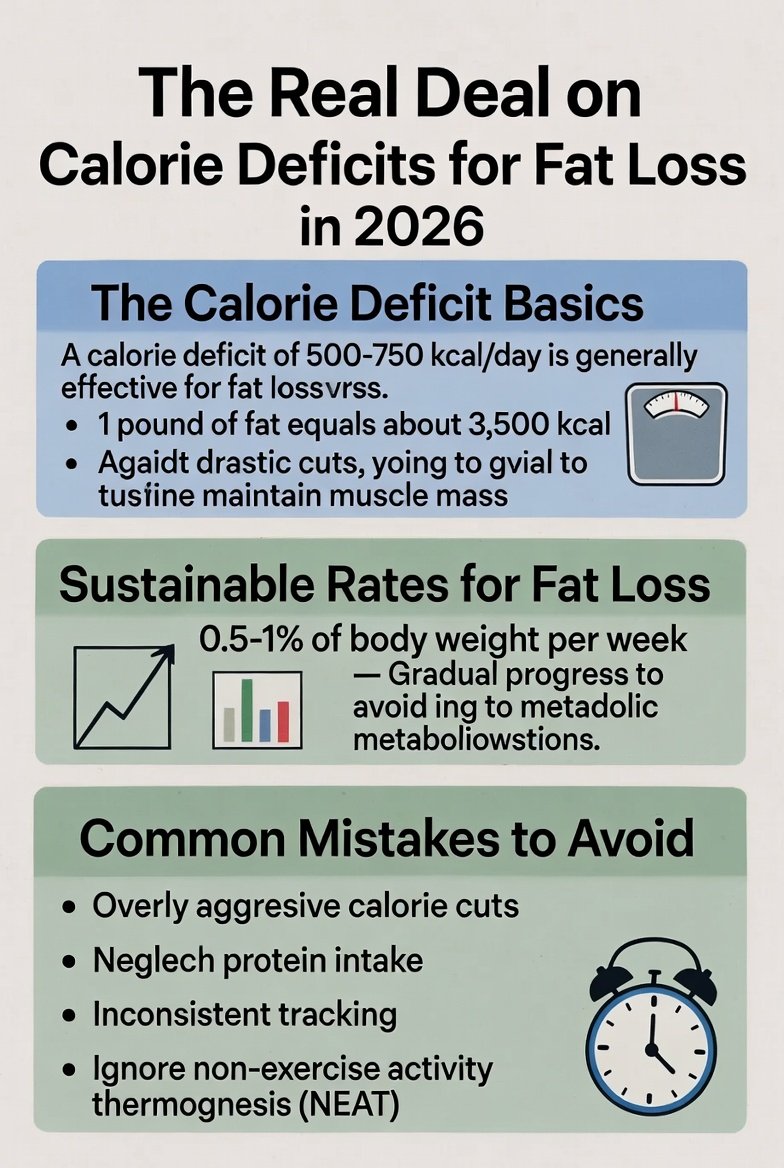
The Real Calorie Deficit You Need for Fat Loss in 2026
Everyone wants fast fat loss — drop 10 kg in a month, get shredded by summer. But in 2026, the evidence is crystal clear: aggressive deficits crash your metabolism, tank hormones, kill adherence, and lead to rebound gain. The “real” calorie deficit isn’t the biggest one you can handle; it’s the one you can stick to for months without hating life.
This post cuts through the hype. We’ll cover what current guidelines (ADA, NIH-aligned research) say about deficits in 2026, why most people pick the wrong size, and how to set one that actually gets you lean sustainably. No magic pills, no extremes — just math that works.
Why Calorie Deficit Is Still King (But Size Matters)
Fat loss boils down to thermodynamics: burn more than you consume. Create a deficit, and your body taps stored fat.
But size matters hugely:
- Too small (<200–300 kcal): Progress crawls; motivation dies.
- Too big (>750–1,000+ kcal): Hunger skyrockets, muscle loss accelerates, NEAT drops, metabolism adapts downward (5–15% reduction possible), and you quit or rebound.
2026 guidelines from major bodies like the American Diabetes Association (Standards of Care) and ongoing meta-analyses recommend 500–750 kcal/day deficits for significant, sustainable weight loss (typically 0.5–1 kg/week or 0.5–1% bodyweight/week). This hits the sweet spot: meaningful results without extreme suffering.
Precision Nutrition’s 2026-updated models align: “Reasonable” fat loss is 0.5–1% bodyweight/week (e.g., 1–2 lbs for men, 0.8–1.65 lbs for women) with 70–85% consistency.
James Smith style? Keep it sensible — aim for progress you can live with long-term, not a sprint that ends in a binge.
How Much Deficit Should You Actually Use?
Start here based on your goal and experience:
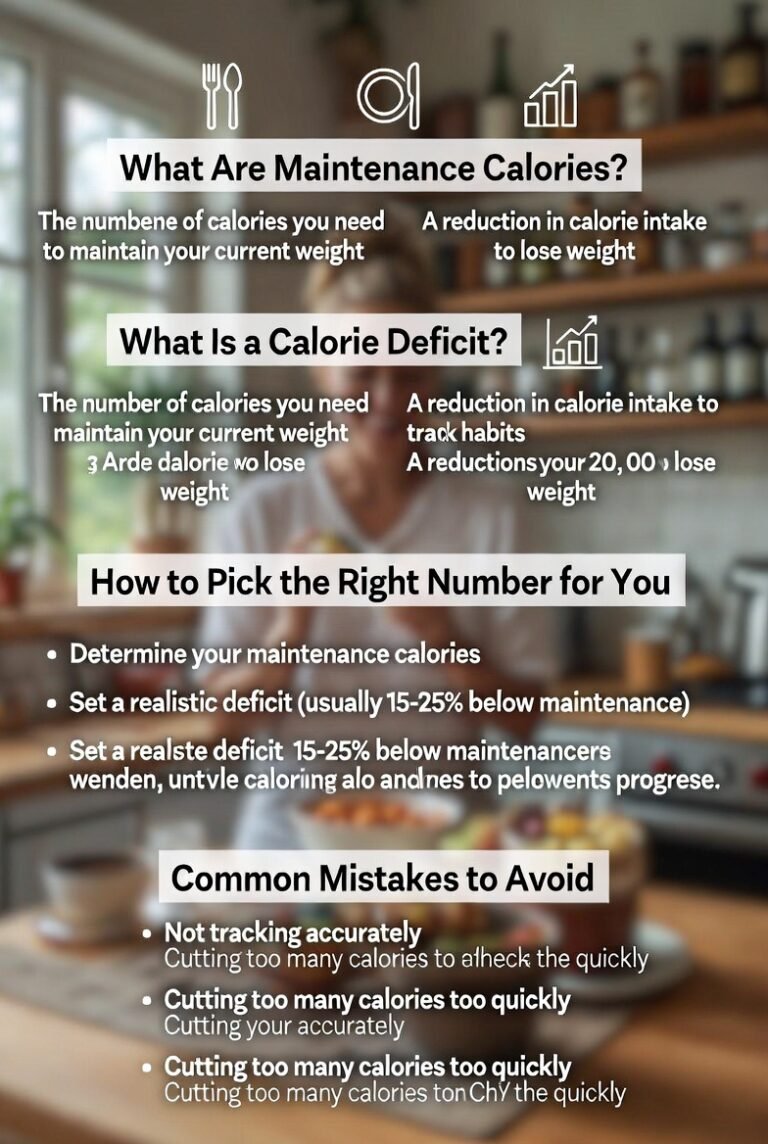
- Beginner/Moderate Fat Loss (Most People): 15–20% below TDEE (~400–600 kcal deficit).
- Realistic rate: 0.5–0.75% bodyweight/week.
- Why? High adherence, minimal muscle loss, sustainable energy.
- Standard Evidence-Based (ADA/Clinical Recs): 500–750 kcal/day deficit.
- Translates to ~1–1.5 lbs/week for most.
- For women: Often lands at 1,200–1,500 kcal total intake.
- For men: 1,500–1,800 kcal total intake (adjust for baseline weight).
- Aggressive (Experienced Only, Short-Term): 20–25% below TDEE (~600–1,000 kcal).
- Faster visible results but higher risk of fatigue, hormone disruption (e.g., lower testosterone/thyroid), and rebound. Use sparingly (4–8 weeks max).
Avoid anything >25–30% or below essential minimums (e.g., no <1,200 kcal for women, <1,500 for men without supervision). Crash deficits aren’t “hardcore” — they’re stupid.
How to Set Your Real Deficit (Step-by-Step)
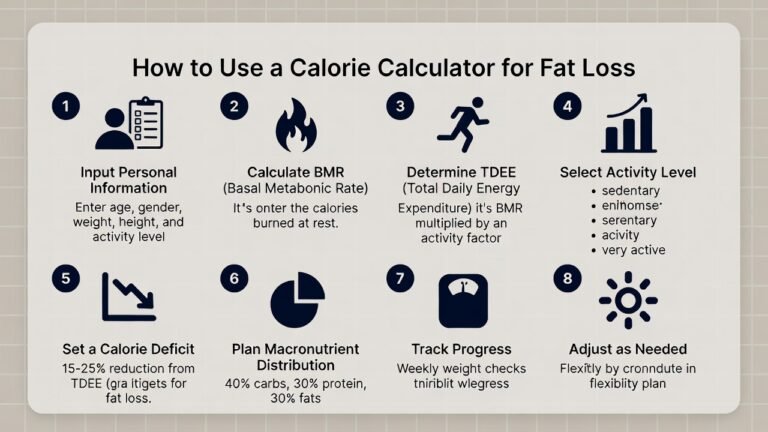
- Get your accurate TDEE first (use our James Smith Calculator — Mifflin-St Jeor based, conservative activity multipliers).
- Choose your deficit size:
- Conservative: Subtract 15% from TDEE.
- Standard: Subtract 500–750 kcal (or 20%).
- Track your starting weight/body-fat estimate.
- Example:
- TDEE = 2,500 kcal.
- Real deficit: 500–750 kcal → Target 1,750–2,000 kcal/day.
- Expected loss: ~0.5–0.75 kg/week (mostly fat if protein high and training).
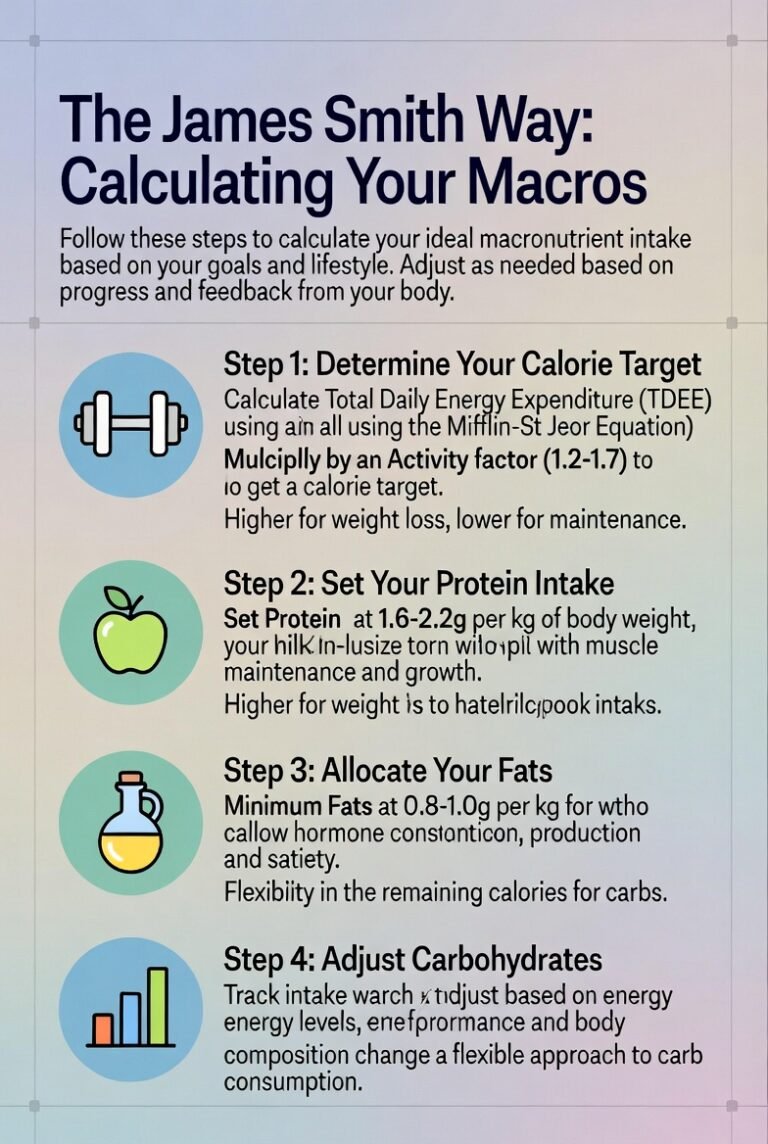
- Prioritize protein (1.6–2.2 g/kg) to preserve muscle — makes the deficit feel easier.
- Add movement (steps, resistance training) to increase TDEE naturally instead of slashing food further.
Track and Adjust — Because Your Body Isn’t Static
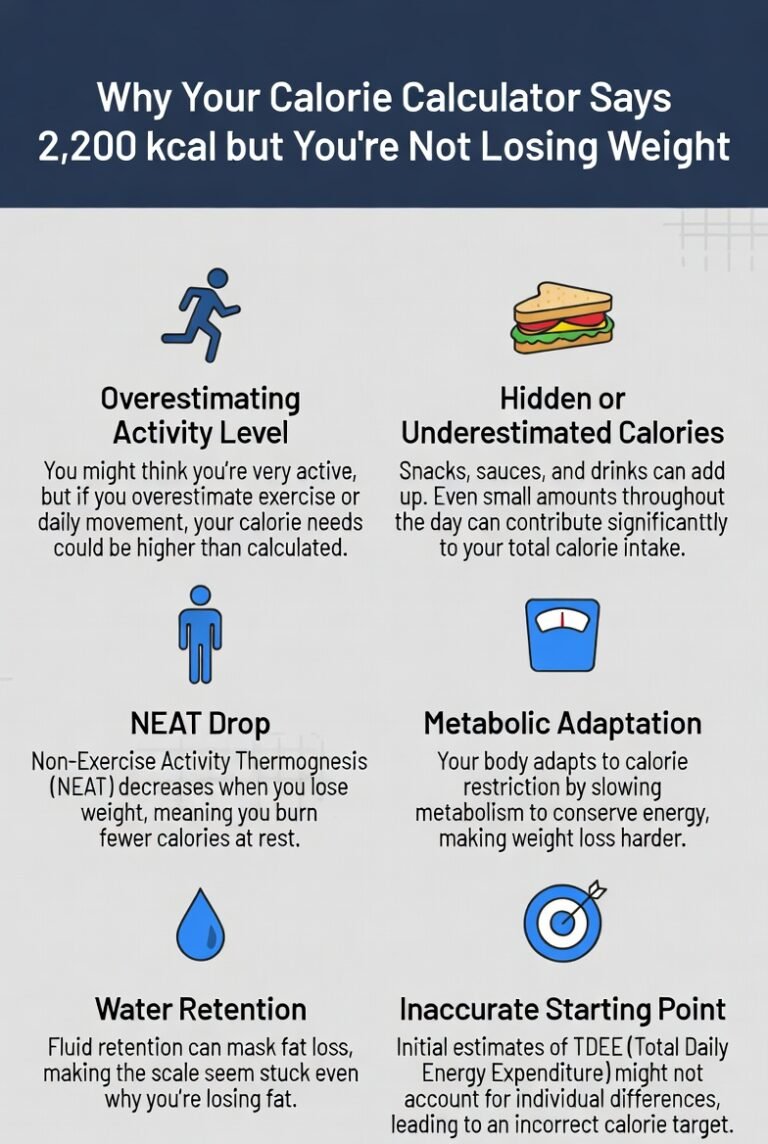
Deficits aren’t set-it-and-forget-it. Metabolism adapts, NEAT drops, weight loss slows.
Monitor weekly average scale weight + measurements/photos:
- Losing 0.5–1% bodyweight/week? Perfect — stay put.
- Stalled after 2–3 weeks? Drop another 100–200 kcal or add 2,000–3,000 steps/day.
- Too fast (>1.5% bodyweight/week) or wrecked (low energy, poor sleep, stalled lifts)? Add 100–200 kcal back.
Re-calculate TDEE every 4–6 weeks as you lose weight — needs drop ~20–25 kcal per kg lost.
Common Mistakes That Ruin Deficits in 2026
- Picking aggressive because “motivated” — leads to burnout.
- Ignoring adaptation — sticking to the same number forever.
- Eating back “exercise calories” from trackers (they overestimate 20–50%).
- No protein focus — lose muscle, lower TDEE long-term.
- All-or-nothing mindset — one bad day doesn’t ruin it; weekly average does.