How to Use a Calorie Calculator to Finally Get Lean (Without the BS)
Getting lean isn’t about magic diets, fancy apps, or endless cardio. It’s about consistently eating fewer calories than you burn — a calorie deficit — while keeping protein high and training smart. Most people fail because they guess their numbers or follow outdated advice. A proper calorie calculator fixes that.
In this guide, you’ll learn step-by-step how to use a calorie calculator (like the one on this site) to dial in your fat loss without starving, losing muscle, or plateauing early. Let’s cut the nonsense.
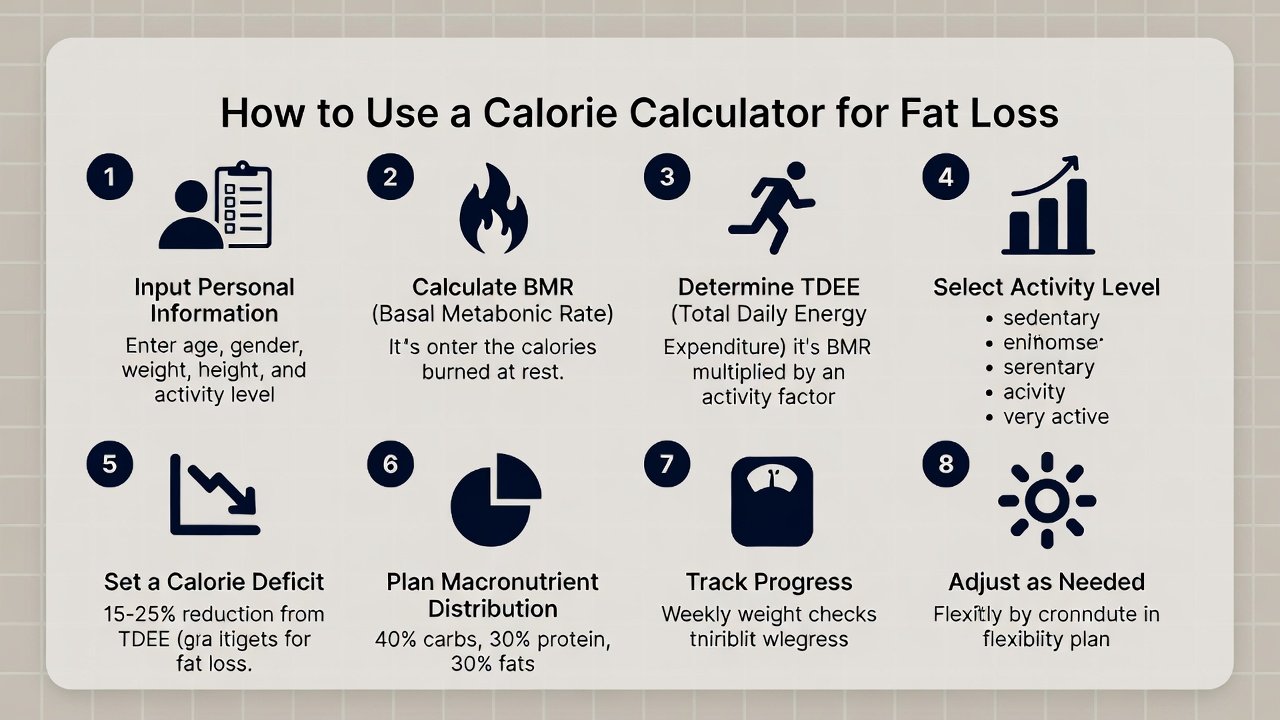
Step 1: Understand What a Calorie Calculator Actually Does
A good calorie calculator estimates two key numbers:
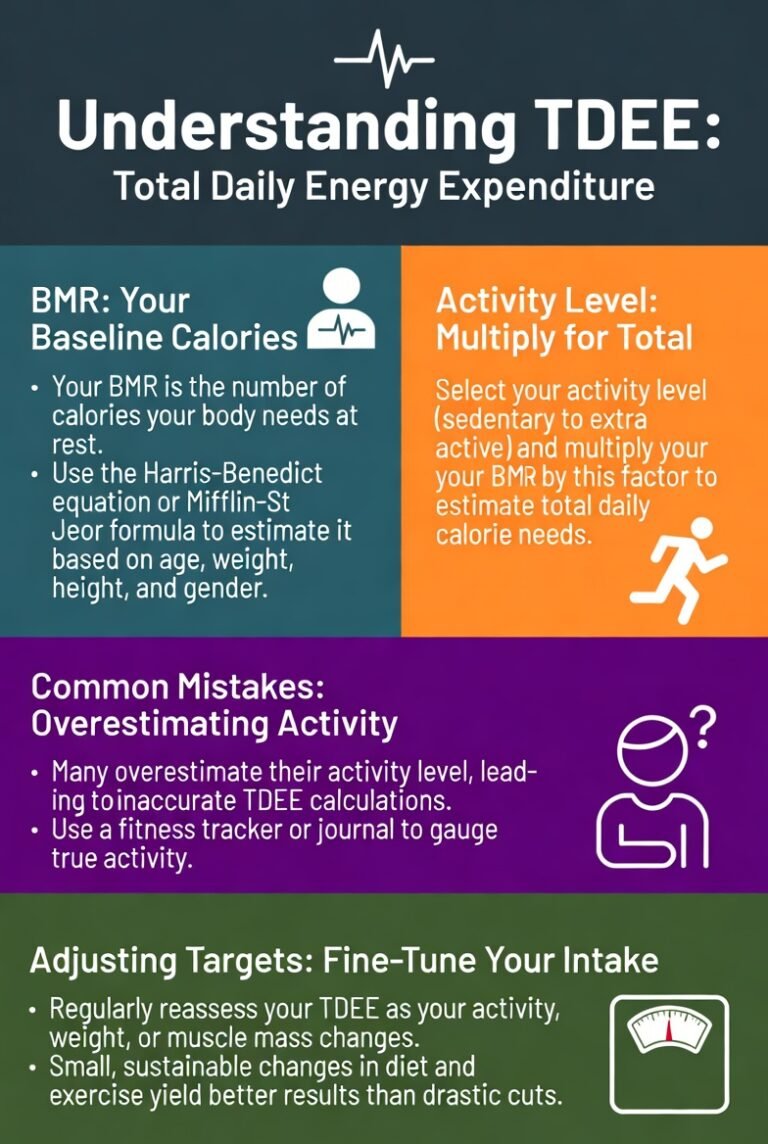
- BMR (Basal Metabolic Rate) — Calories your body burns at complete rest for basic functions (breathing, heart beating, etc.).
- TDEE (Total Daily Energy Expenditure) — Your BMR multiplied by a realistic activity factor, giving total calories burned in a day including movement, work, and exercise.
The most accurate BMR formula in 2026? Mifflin-St Jeor. Studies consistently show it predicts resting metabolism within ~10% for most people — better than older ones like Harris-Benedict.
Men: BMR = 10 × weight (kg) + 6.25 × height (cm) − 5 × age + 5 Women: BMR = 10 × weight (kg) + 6.25 × height (cm) − 5 × age − 161
Your calculator handles this instantly. Just input age, gender, height, weight — no math required.
Step 2: Nail Your Activity Level (This Is Where Most Go Wrong)
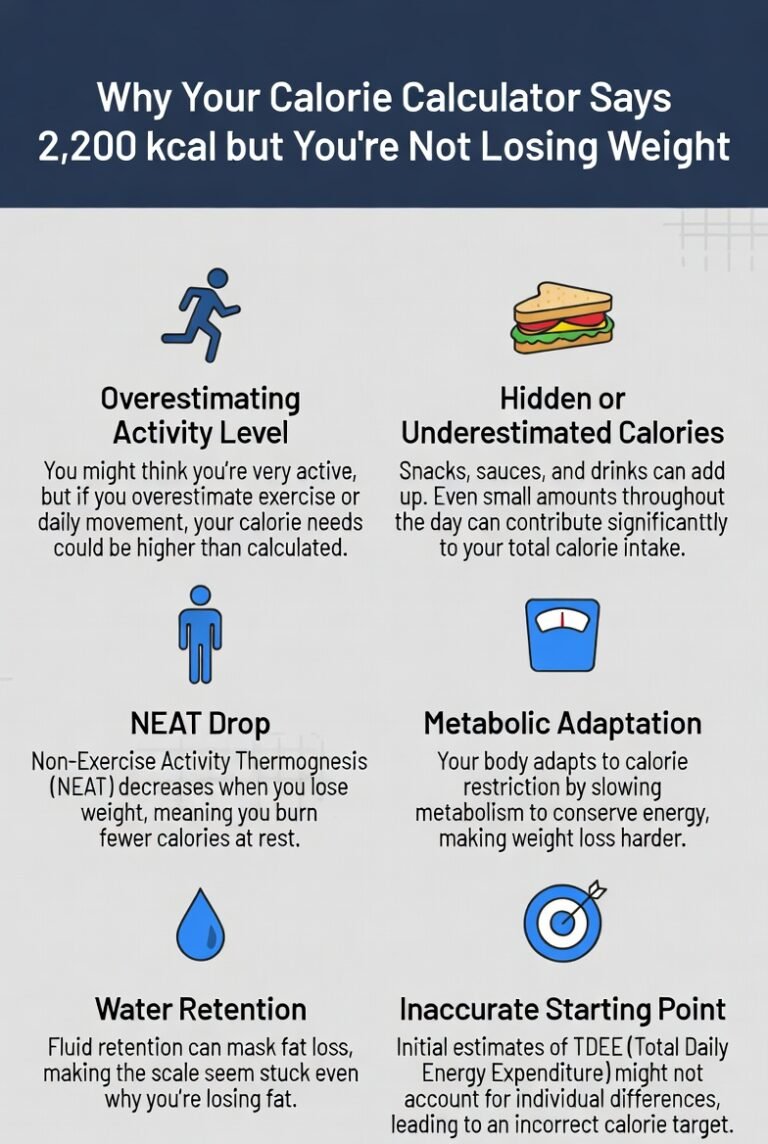
Activity multipliers turn BMR into TDEE. Be brutally honest here — overestimating is the #1 reason people “eat at maintenance” but gain fat.
Common realistic multipliers (James Smith style — conservative and real-world):
- Sedentary (desk job, <5,000 steps/day, no training) → ×1.2
- Lightly active (office + 3-5k steps + light walks or 1-3 gym sessions/week) → ×1.375
- Moderately active (active job or 4-5 gym sessions/week, 7-10k steps) → ×1.55
- Very active (physical job + 5-6 hard sessions/week, 10k+ steps) → ×1.725
Pro tip: If you’re unsure, start lower. It’s easier to add 100-200 kcal later than to wonder why you’re not losing.
Step 3: Set Your Calorie Target for Fat Loss
For sustainable fat loss (0.5-1% bodyweight/week, minimal muscle loss):
- Moderate deficit: Subtract 15-20% from TDEE (most recommended for long-term adherence).
- Example: TDEE 2,500 kcal → Target 2,000-2,125 kcal/day.
- Aggressive (faster loss, higher hunger risk): 20-25% deficit — only if you’re experienced and not already lean.
Avoid crash deficits (>25-30%). They tank energy, hormones, and adherence. James Smith emphasizes sustainable over speedy — get lean and stay lean.
Your calculator should spit out this adjusted number automatically when you select “fat loss” as the goal.
Step 4: Set Macros (Don’t Just Wing It)
Calories matter most for fat loss, but macros keep you full, preserve muscle, and make life livable.
Evidence-based starting points:
- Protein: 1.6-2.2 g per kg bodyweight (higher end if training hard). Aim ~30-40% of calories.
- Fat: Minimum 0.8-1 g/kg (20-30% of calories) for hormones.
- Carbs: Fill the rest — fuel workouts without excess.
Example for 80 kg person at 2,000 kcal target:
- Protein: 160-180 g (640-720 kcal)
- Fat: 60-70 g (540-630 kcal)
- Carbs: 150-180 g (600-720 kcal)
Many calculators (including ours) give you these splits instantly.
Step 5: Track and Adjust — The Real Secret to Getting Lean
A calculator is a starting point, not gospel. Real metabolism varies ±10-15% due to genetics, NEAT (non-exercise activity), and adaptation.
What to do:
- Track everything accurately for 2 weeks (use an app like MyFitnessPal or Cronometer — weigh food when possible).
- Weigh yourself daily (morning, after toilet, before eating) — use weekly average.
- Progress check:
- Losing 0.5-1 kg/week? Perfect — stay the course.
- No change after 2-3 weeks? Drop 100-200 kcal or increase movement.
- Losing too fast (>1 kg/week) or feeling wrecked? Add 100-200 kcal back.
Re-calculate TDEE every 4-6 weeks as weight drops — your needs decrease.
Common Mistakes to Avoid
- Eating back exercise calories (your activity level already accounts for workouts).
- Ignoring NEAT drop (people unconsciously move less in a deficit).
- Obsessing over one bad day — focus on weekly average.
- Using inaccurate formulas (stick to Mifflin-St Jeor based tools).
- Quitting too soon — visible leanness takes 12-20+ weeks for most.
Final Word: Get Your Numbers Now
Stop guessing. Plug your stats into the James Smith Calculator right here on the site — it’s free, no sign-up, and built for real results.
Get your TDEE, deficit target, and macros in under 30 seconds. Then track consistently for 14 days. Adjust based on the scale and mirror, not feelings.
Fat loss is simple math + consistency. No BS required.
Ready to get lean? Calculate now and start today.